

SAP Trading Partner Management (TPM) is a core component of the SAP B2B Integration Cockpit, part of SAP Process Orchestration (SAP PO). It provides a centralized, user-friendly interface for managing EDI business relationships with multiple trading partners — including partner profiles, agreements, functional profiles, and security certificates. For organizations running complex SAP PO B2B EDI integrations, TPM eliminates the need to manage partner data in scattered configuration files. According to SAP Help Portal, TPM supports all major EDI protocols and standards including EDIFACT, ANSI X12, and Odette.
SAP B2B Integration Cockpit is a platform that enables you to monitor and access the B2B add-on platform from SAP Process Orchestration. It combines 3 parts: EDI, Logs and Technical Settings. You can use B2BIC for:
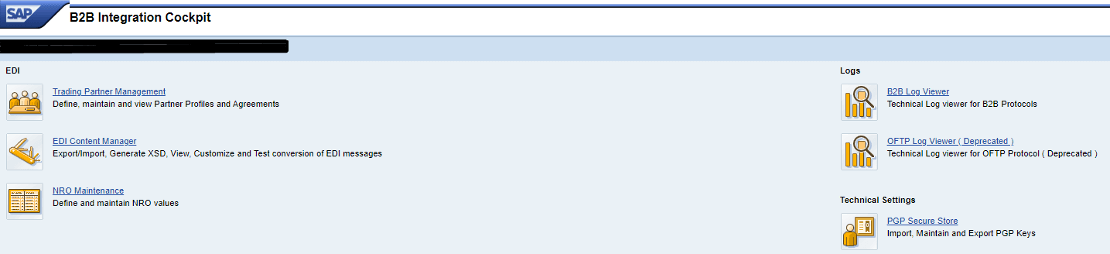
SAP B2B Trading Partner Management provides the needs of B2B commerce in an EDI environment. TPM helps you streamline and manage EDI business relationships with multiple trading partners, profiles, and agreements. TPM's easy-to-use interface solves the complexity of B2B communication between partners.
TPM helps you to:
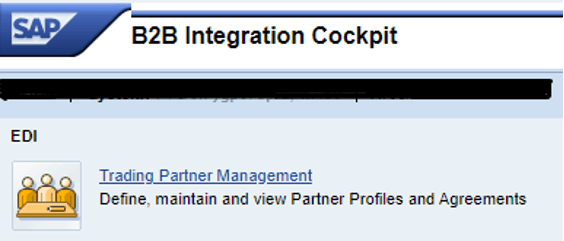
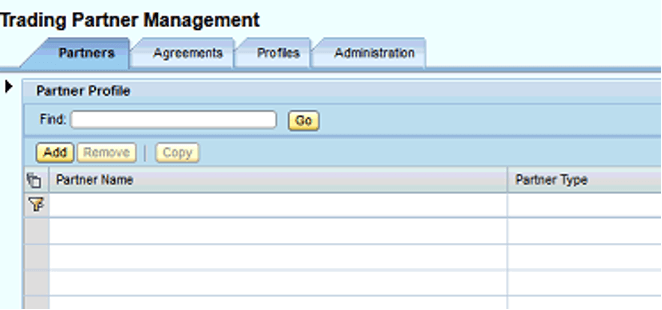
You can get started with Trading Partner Profile by defining Partner Profiles. EDI with trade profiles helps you improve business communication. You create profiles of trading partners to store information such as partner name, type, industry, region, contracts, and documents. After adding a partner profile, you can copy, edit, and find existing ones.
You can use a trading partner agreement between two trading partners to regulate the exchange of EDI documents and define the communication scenario. All agreements are kept in the TPM database and can be added, copied, and edited easily.
You can create multiple profiles based on trading partners' business requirements. A functional profile is a collection of TPM templates storing custom key values. You can access a functional profile during runtime by calling a contract or functional profile name using predefined UDFs in SAP Process Orchestration. Add, copy, edit and find functional profiles on TPA.
Templates store generic data reusable across different profiles, made up of key-value pairs. Code lists define runtime parameters with specific values. Certificate Rollover Profiles store security certificates associated with each trading partner. You can also use the Import/Export TPM Data option to import/export TPM files into a Trading Partner Management database.
SAP EDI (Electronic Data Interchange) is the broader framework for exchanging business documents electronically with trading partners. SAP Trading Partner Management (TPM) is the administrative layer within the SAP B2B Integration Cockpit that manages the configuration data for those EDI exchanges — partner profiles, agreements, protocols, and certificates. EDI is the process; TPM is the management tool that keeps the partner configuration organized and accessible. Without TPM, managing dozens or hundreds of trading partners in SAP PO becomes operationally complex and error-prone.
SAP TPM as described here is part of SAP Process Orchestration (SAP PO), which is SAP's on-premise integration platform. SAP Integration Suite (the cloud successor to SAP PO) has its own B2B capabilities through the Integration Advisor and Trading Partner Management features, which are built natively into the cloud platform. For organizations migrating from SAP PO to Integration Suite, the trading partner data and agreements need to be reconfigured in the Integration Suite's B2B module. MDP Group supports this migration process as part of our SAP Integration Suite consultancy.
There is no hard technical limit on the number of trading partners that can be managed in SAP TPM. Organizations in automotive, retail, and manufacturing sectors routinely manage hundreds of trading partners through SAP PO's TPM. Performance depends on the SAP PO server sizing and the volume of EDI messages being processed. For organizations with very large partner networks (500+), SAP Integration Suite's cloud-based B2B management is often recommended as it scales more easily.
SAP Help Portal — SAP NetWeaver
MDP Group — SAP PO B2B EDI Protocols
MDP Group — SAP Integration Suite Consultancy

SAP PI/PO Consultant
Your mail has been sent successfully. You will be contacted as soon as possible.
Your message could not be delivered! Please try again later.