


In today's world, where technology is developing rapidly, digital transformation processes are of great importance to many users. In this article, we will take a closer look at SAP AI Services, which we discussed in my previous blog post, from a technical perspective
Firstly, we will create a custom schema.
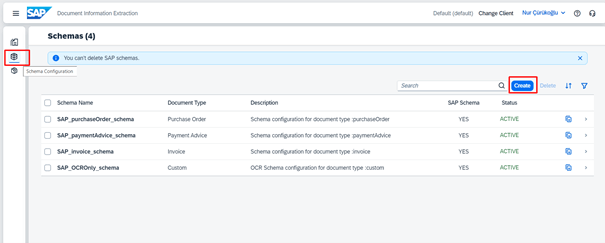
We open the Document Information Extraction UI Application.Then, in the left pane, click schema configuration and to create your own schema, click create button. A dialog opens.
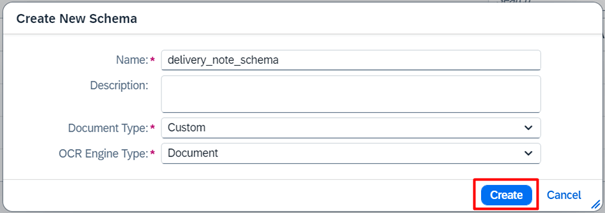
In the dialog box, enter a name for your custom schema - for example, delivery_note_schema. Note that the name can't contain any spaces. Next, select Custom as the Document Type and Document as the OCR Engine Type. And, lastly click Create button to create the schema.
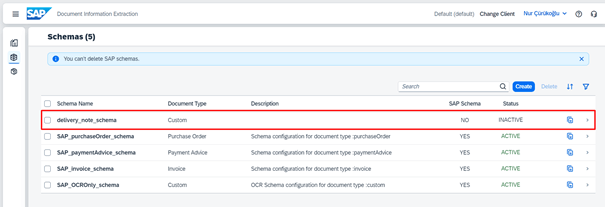
Now, the schema that we have created will appear in the list below. You can access the schema by clicking on it.
Add to your header and line items fields.
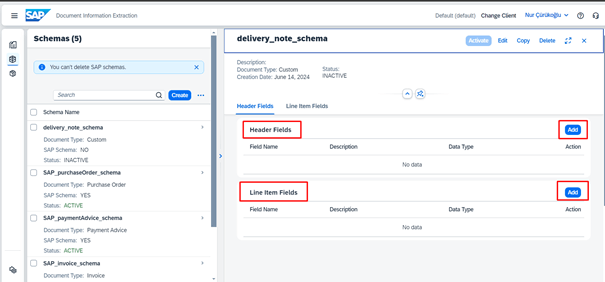
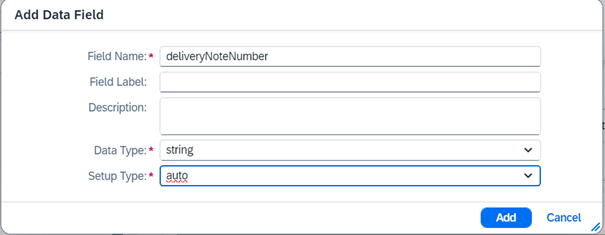
You must enter a field name and data type for each custom field. The available data types are string, number, date, discount, currency, and country/region. Default extractors aren’t available for custom documents. You can also optionally add a field label (user-friendly name) and a description. They are optional fields.
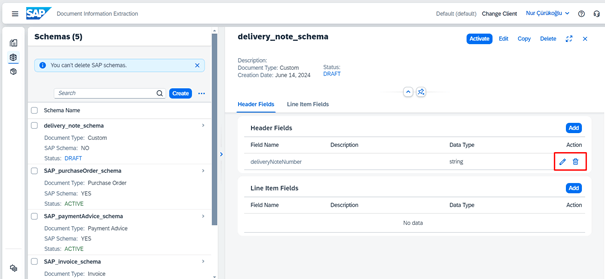
The field will now appear in your list of header fields, where you can see all the information you've just entered. You can edit or delete the field by clicking on the icons to the right.
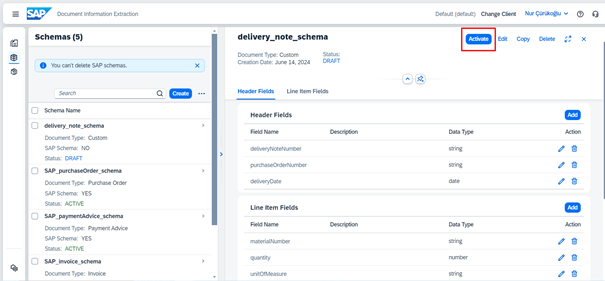
We will also create the fields that are specified in the table below.
Field Type | Field Name | Data Type | Setup Type |
header field | deliveryNoteNumber | string | auto |
header field | purchaseOrderNumber | string | auto |
header field | deliveryDate | date | auto |
line item field | materialNumber | string | auto |
line item field | quantity | number | auto |
line item field | unitOfMeasure | string | auto |
Once you've added all your fields, you need to activate the schema so that you can use it to extract information from documents. At the moment the schema has the status DRAFT, which means that it can't be used yet.
To activate the schema, click Activate button.
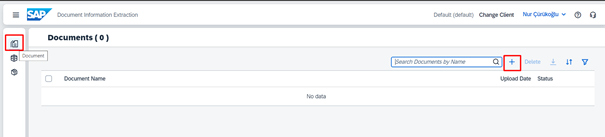
Access Document from the navigation on the left of the screen, then click + to upload the delivery note document.
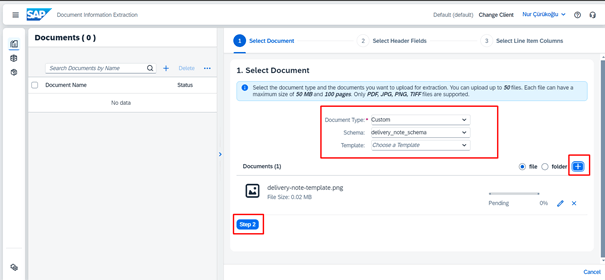
On the Select Document screen, choose Custom for the Document Type. Select the Schema you created (delivery_note_schema). Click + button to upload the sample document. Click Step 2.
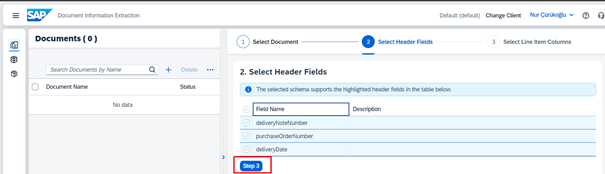
Click Step 3 and review buttons.
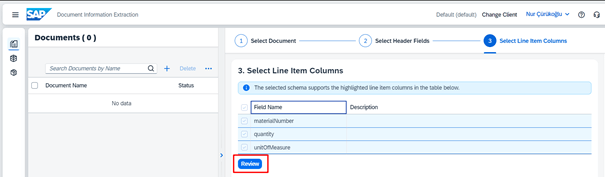
Review your selection. If you want to change anything, you can click Edit button. Click Confirm button.
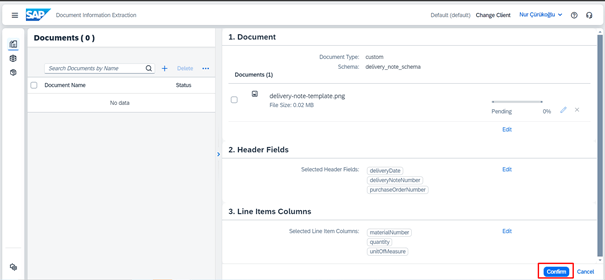
The document status changes from PENDING to READY
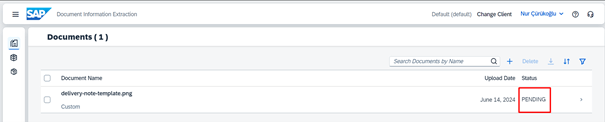
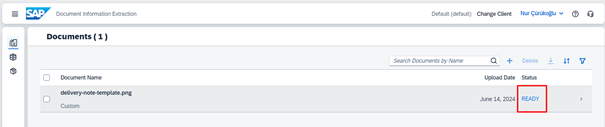
Access the document by clicking on it. Click Extraction Results to see the information extracted from the delivery note and the schema that you created.
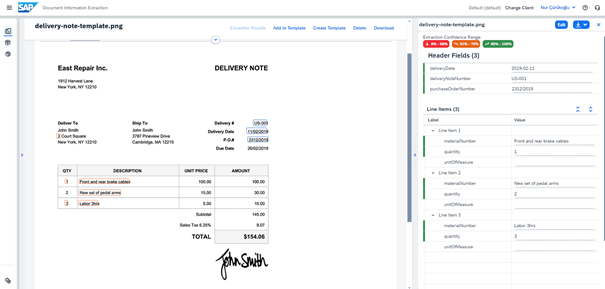
In this blog, we discussed how to create a custom schema and perform a step-by-step extraction of document information using SAP AI Services. In particular, we looked in detail at the process of extracting information from delivery note documents.
You can have fun with your work on any document.

SAP Fiori and ABAP Developer
Your mail has been sent successfully. You will be contacted as soon as possible.
Your message could not be delivered! Please try again later.