

In today’s digital world, data is at the heart of everything. But simply owning data is no longer enough. Sharing the right data, with the right people, at the right time — and doing it securely and efficiently — is just as important.
This is where SAP Integration Suite, one of SAP’s most powerful tools, comes into play. It makes data integration and sharing much easier for businesses, without unnecessary complexity.
In this article, we’ll answer the following questions in a simple, non-technical way:
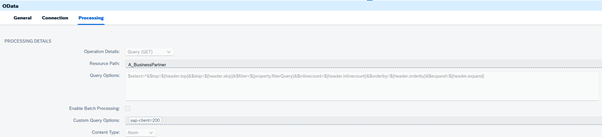
When external applications need access to SAP data — such as customer info, orders, or inventory — it’s essential to share that data in a secure, transparent, and controlled way.
That’s exactly what OData enables: a modern, standardized way to share SAP data.
With SAP Integration Suite, you can:
Retail Example:
Let’s say you run an online store with multiple physical branches. Each store can be set up to only view its own inventory and order history. This allows centralized data sharing while keeping visibility and access store-specific and secure.
Logistics Example:
Imagine regional warehouse managers needing access to shipping details. You can set it up so each manager sees only their own region’s data — no more, no less. Each location can focus on its operations without accessing global information.
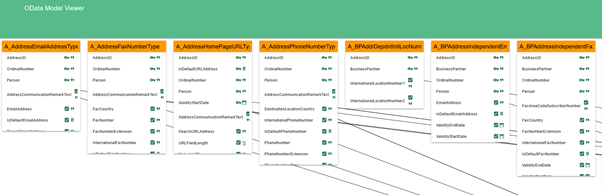
Technically, EDMX is a file format — but what matters for you is this:
EDMX defines which data will be shared and how it will be shared. Think of it like a data menu.
Example: At a restaurant, you get a menu with all available dishes — and you choose what you want.
Similarly, the EDMX file tells external systems:
"Here’s what’s available. Pick only what you need."
This keeps your systems working smoothly and in sync with each other.
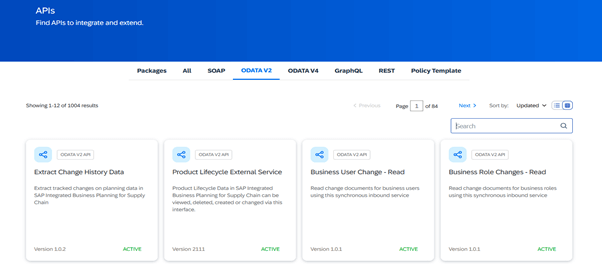
Imagine a platform where you can browse, test, and use thousands of ready-to-use APIs developed by SAP.
That’s the API Business Hub.
With this platform, you can:
This saves time and cost, while ensuring quality and reliability.
Faster Integration
Launching a new customer portal, connecting external systems, or building a mobile app no longer takes months.
With SAP Integration Suite, it can be done in hours.
Secure and Controlled Access
You decide who sees what. No unnecessary data exposure.
Flexibility and Scalability
Start small — maybe just share product data. Then expand to full order and inventory flows as your needs grow.
Time-Saving with Pre-Built Services
Thanks to the API Business Hub, you don’t have to build everything from zero. Use SAP’s tested and reliable services instead.
If your business is on a digital transformation journey and you're already using SAP, tools like OData services, EDMX, and the API Business Hub will make your life easier.
It allows you to develop fast, smart, and tailored solutions without dealing with complex technical details — boosting your team’s productivity and making your business more agile.
Learn about SAP Integration Suite consulting.

SAP PI/PO/CPI Consultant
Gamze Yücel Kurtkapan is an integration consultant with experience in SAP PI/PO/CPI and Microsoft Azure Logic Apps. She has contributed to numerous integration projects across various industries, specializing in SAP and non-SAP system integration, end-to-end integration development, and modern cloud-based integration solutions.
Your mail has been sent successfully. You will be contacted as soon as possible.
Your message could not be delivered! Please try again later.