

In today’s environment, where companies are seeking solutions to optimize business processes and enhance user experience, SAP Fiori’s notification infrastructure plays a critical role. The SAP Fiori Push Notification and Notification Center structures enable the right information to reach the relevant users at the right time, accelerating decision-making processes.
Push Notification is a technology that allows SAP Fiori Launchpad users to instantly become aware of significant events occurring within the system. Unlike traditional email notifications, these notifications are delivered immediately to mobile devices or desktop applications. This enables a critical task or an approval requirement to be completed without delay by the user.
As part of the SAP Notification Framework, Push Notification supports various business scenarios. For example, pending approvals, a current error that needs attention, or a reminder for a time-sensitive task can be communicated to the user.
Notification Center is a centralized structure within the SAP Fiori Launchpad that allows users to view all their notifications from one place. Users can check, review the details, and take necessary actions on these notifications. Working alongside Push Notification, this center expands the scope of notifications, providing a consistent experience across both desktop and mobile devices.
SAP Fiori Push Notification is triggered when an event occurs in the backend system. When a workflow or event is triggered within the SAP system, this event is listened to by the Notification Provider, and the notification content is prepared. The prepared notification is then sent to the user’s device through the Notification Channel, where the user can view it on the Fiori Launchpad or their mobile device.
The Notification Channel Hub is the central unit that manages the delivery of notifications. Push notifications are delivered to user devices through this channel.
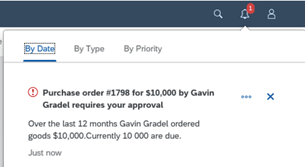
SAP Fiori Push Notification and Notification Center can be used in a variety of business scenarios:
One of the primary advantages of using Push Notification is the potential to improve user experience. Notifications free users from having to constantly track important events, delivering the right information at the right time. This makes decision-making processes within the company faster. Integration with mobile devices is another major benefit. Even if users are far from SAP Fiori applications, they can instantly manage critical tasks. This significantly improves both operational efficiency and employee satisfaction.
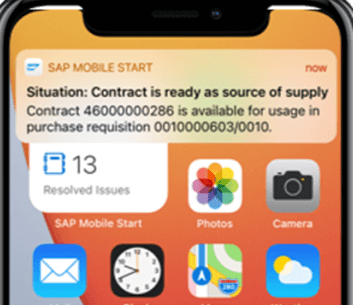
Since SAP Start can integrate with systems on the BTP, if your SAP system does not support the SAP Start mobile application, you can use our mobile application, MDP Fiori Client, to receive and view notifications in real time on your mobile devices.
Conclusion
SAP Fiori Push Notification and Notification Center structures play a critical role in a company’s digital transformation process. By delivering the right information to the right people at the right time, they accelerate business processes, improve operational efficiency, and enhance user experience. The customizable and scalable nature of the notification infrastructure allows businesses in various sectors to meet their unique needs.
In the future, this infrastructure will be further strengthened by technologies such as artificial intelligence (AI) and the Internet of Things (IoT), offering proactive notifications and personalized recommendations to enhance businesses' competitive edge.
You can contact our SAP Fiori Consultants to improve the user experience and increase the efficiency of your business processes.

SAP Fiori Consultant
Hakan Balcı leads digital transformation initiatives focused on SAP Clean Core and ABAP Cloud. He develops cloud solutions using RAP and SAP BTP and digitalizes processes with expertise in Flexible Workflow, BRF+, and Adobe Forms. He serves as a solution architect in international projects.
Your mail has been sent successfully. You will be contacted as soon as possible.
Your message could not be delivered! Please try again later.