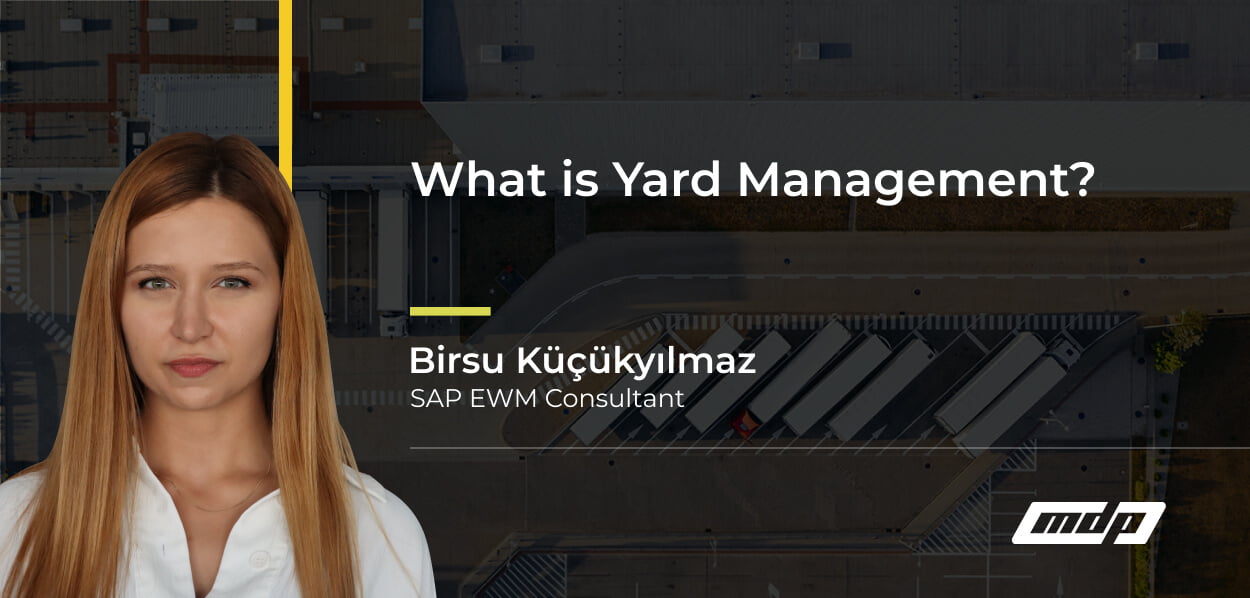
Yard management is a logistics strategy that is used to track, manage, and optimize the flow of vehicles, trailers, containers, and other assets in and out of a yard or distribution center. Yard management includes activities such as the tracking of vehicles, trailers, and containers, ensuring efficient loading and unloading, and controlling the flow of inbound and outbound shipments.
Yard management systems typically include software, hardware, and communication systems that track and communicate the movements of assets within a yard. This information is then used to optimize the flow of traffic, improve yard utilization, and reduce costs.
Cross-docking in the yard is the process of unloading, sorting, and reloading goods in a yard or warehouse environment, typically in a very short period of time. It is a process that is used to quickly move goods from one location to another without the need for storage. Cross-docking can be used to reduce inventory costs, eliminate handling, and improve cycle times.
A yard is an open area of land that is used to store materials or equipment, such as vehicles, containers, or machinery. It may also be used to hold finished products, such as lumber or coal. A warehouse, on the other hand, is a building or complex of buildings used for storing goods, typically products that are being stored for later sale or distribution. Unlike a yard, a warehouse is typically enclosed and climate-controlled, which allows for more secure storage and better protection from the elements.
SAP EWM Consultant
AI-Powered Document Verification: ISO and Financial Document Guide
AI-powered document verification automatically detects fraudulent and erroneous documents in enterprise workflows. It reduces dependency on manual...
What Is Olmo 3? A Deep Dive into the Fully Open-Source LLM
Is Olmo 3 Truly Fully Open Source? In the fast-moving, hype-filled world of Large Language Models (LLMs), the term "Open Source" has faced a severe...
Slotting Process in SAP EWM: Complete Warehouse Optimization Guide
The slotting process in SAP EWM is one of the most impactful warehouse optimization techniques available in SAP Extended Warehouse Management. It...
e-Invoicing in Germany: Requirements, Timeline and Solutions
Germany first introduced electronic invoicing for Business to Government (B2G) transactions in 2020. XRechnung, ZUGFeRD or Peppol BIS formats were...
SAP BTP ABAP Multitenancy Explained Simply
IntroductionSAP Business Technology Platform (BTP) is at the core of modern cloud-based enterprise solutions, helping businesses integrate data,...
Desi Calculation in EWM
IntroductionIn EWM Monitor we can display volume by different units of measure. In this blog, I will explain how you can calculate desi as a volume...
The Capabilities and Functions of iPaaS (Integration Platform as a Service)
Today's business world has become digitalized. Businesses have become more reliant on cloud-based technologies to streamline their operations. One of...
What is SAP HANA Smart Data Integration?
In the modern business world, data is considered one of the most precious resources. However, integrating and analysing this data correctly can often...
What is Task Interleaving?
Task interleaving is an advanced strategy to optimize internal warehouse movements. It can be used both in goods receipt and goods removal. It is...
Your mail has been sent successfully. You will be contacted as soon as possible.
Your message could not be delivered! Please try again later.