Overview of SAP TM and SAP EWM
TM (Transportation Management) is a transportation planning and execution system integrated with SAP's ERP system. EWM (Extended Warehouse Management) is a warehouse management system (WMS) that is integrated with SAP's ERP (Enterprise Resource Planning) system. Together, EWM and TM provide a comprehensive solution for managing and optimizing warehouse and transportation processes within an organization. They can be used together to plan and execute inbound and outbound deliveries, manage inventory and warehouse operations and optimize transportation routes and costs.
Benefits of EWM - TM Integration
- Enhanced transportation planning: Integrating EWM and TM allows for the optimization of transportation planning by taking into account warehouse-specific constraints such as storage capacity and inventory levels.
- Improved inventory management: Integrating EWM and TM allows for real-time tracking of inventory and transportation, which helps ensure that the right products are available at the right place and time.
- Increased automation: Integrating EWM and TM enables automation of transportation processes such as carrier selection, shipment planning, and freight billing, which can reduce the need for manual intervention and increase efficiency.
- Better compliance and risk management: Integrating EWM and TM allows companies to manage risks and comply with regulations in a more effective and efficient way by providing a single source of truth for all transportation-related data.
- Improved customer service: Integrating EWM and TM enables companies to provide real-time tracking information to customers and make more informed decisions about transportation and logistics.
Considerations in SAP TM and SAP EWM Integration
When integrating EWM and TM, the potential bottleneck can be the amount of data that needs to be exchanged between the two systems. EWM and TM both have their own set of master data (such as material and location master data) and transactional data (such as delivery and transfer order data) that need to be shared and kept in sync. This can put a strain on system resources and can lead to slow performance or data inconsistencies if not handled properly.
Another potential bottleneck can be related to the complexity of the integration. Since EWM and TM are both complex systems with their own set of functionality, integrating them can be challenging and require a significant amount of customization. This can lead to increased implementation time and costs.
Overall, it is important to have a detailed plan and test the integration thoroughly before going live to minimize the risk of bottlenecks and ensure smooth operation.
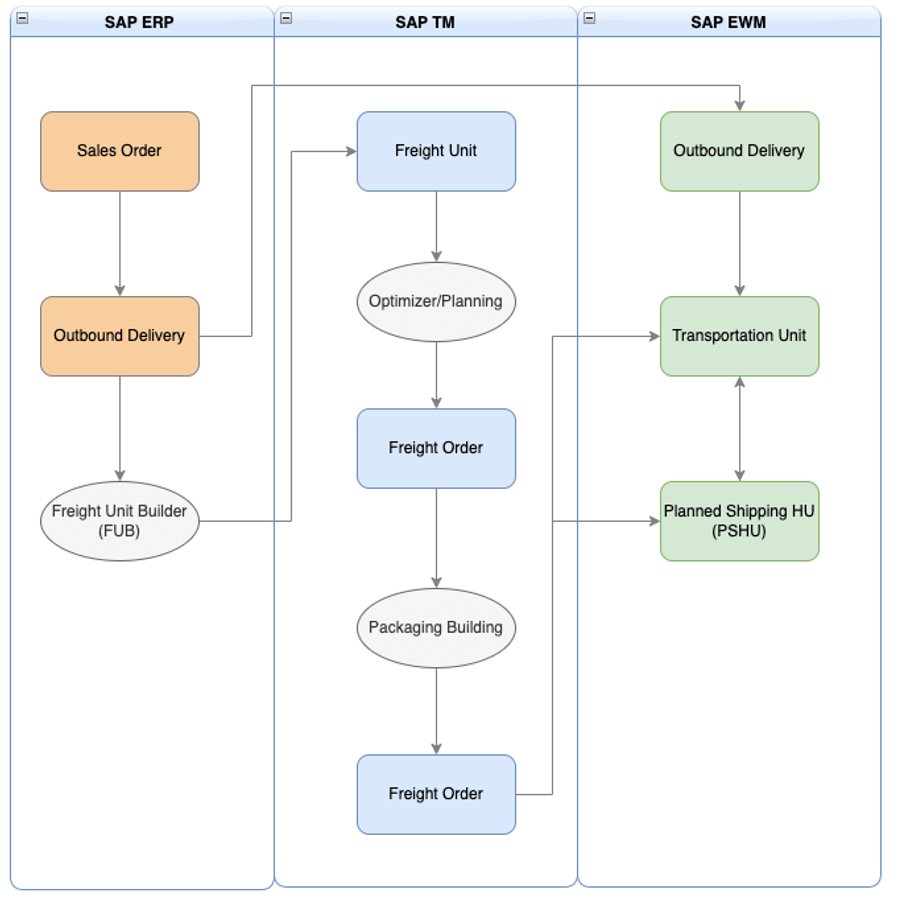
Process Model of SAP TM & EWM Integration
Delivery Based Transportation Planning