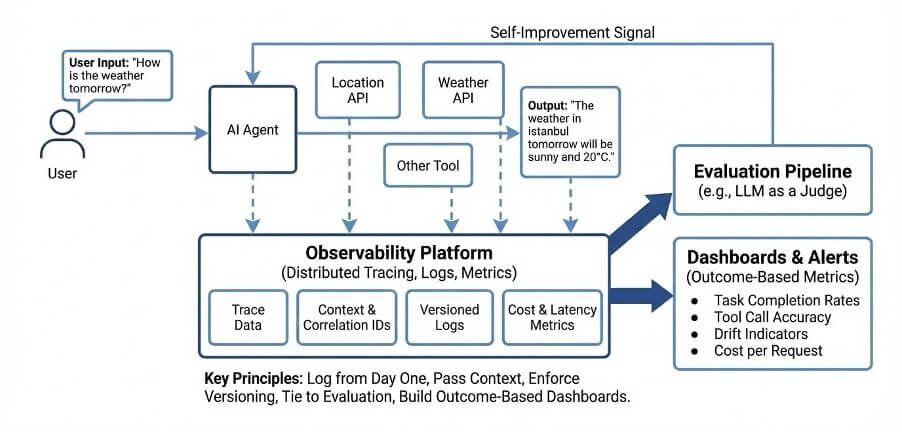
Figure 2: Agent Observability Architecture
To effectively debug a multi agent architecture, observability platforms rely on distributed tracing to capture exactly which tools were executed, what memory context was retrieved, and how much the operation cost in tokens and latency. However, knowing what to track is only half the battle. To implement this without creating a messy architecture, you need to follow a few core engineering principles.
Here are the best practices for setting up robust observability in your multi agent systems:
- Log Everything from Day One: Do not wait until your agent fails in production to start thinking about tracing. Instrument your code during the development phase. Whether you are building an agent that performs live web searches for up to date information or fine tuning a model to extract structured data from OCR results, capturing traces early helps you understand baseline performance before the architecture gets overly complex.
- Pass Context Across Boundaries: In a multi agent setup, tasks are frequently delegated. When the orchestrator agent hands off a task to a specialized sub agent, the trace must not break. Always use correlation IDs to stitch these handoffs together. This ensures you have a single, unified execution graph instead of scattered and useless log files.
- Enforce Strict Versioning and Structured Logging: Correlation is the key to debugging high cardinality data. You must version everything: system prompts, the specific model parameters like temperature, and the external tools available to the agent. Combine this with structured logging to standardize how outputs are recorded. When an agent hallucinates or fails a task, this metadata allows you to instantly see if the error was caused by a recent prompt update or a change in the underlying data source.
- Tie Observability to Evaluation: Collecting trace data is only half the battle. To get real value, connect your observability stack directly to your evaluation pipeline. Use your tracing platform to trigger automated checks, like running an LLM as a Judge on specific traces that took too long or consumed too many tokens. This creates a continuous loop of self improvement.
- Build Dashboards and Alerts Around Agent Outcomes: Your dashboards should answer whether your agents are actually doing their jobs, not just whether the servers are running. Track task completion rates, evaluation scores, tool call accuracy, drift indicators, and cost per request. Break these metrics down by specific agent, route, and model. Set up intelligent alerts on these core signals so you are notified the moment completion rates drop or costs spike, rather than waiting for a critical system failure.
How to Evaluate Agent Performance
Observability provides the raw data and metrics, but evaluation is the process of analyzing those traces to determine how well an AI agent is actually performing. Because autonomous agents are non deterministic and constantly evolve, you need a systematic grading process to know if your smart system is doing its job or silently regressing.
To build a reliable evaluation pipeline, engineering teams must define when to test, what granularity to measure, and which scoring techniques to apply.
When to Evaluate: Online versus Offline
- Offline Evaluation: This is your controlled lab environment. Before deploying any agent, you run it against curated test datasets where you know the exact ground truth. For example, if you are building an agent to extract specific pricing information from OCR invoice results, you test it against a hundred known invoices. Running offline evaluations within your CI CD pipelines is the best way to catch regressions before they hit production.
- Online Evaluation: This happens in your live production environment. It monitors how the agent handles unpredictable real world user queries. Online evaluation is crucial for catching model drift and identifying when an agent starts failing on edge cases that were completely missing from your offline test dataset.
At What Granularity: The Three Levels of Testing
Agent behavior only emerges at runtime, which means you must evaluate the observability data at different depths.
- Single Step Evaluation: Think of this as a unit test for reasoning. You are validating one specific decision point. For instance, when asked for up to date news, did the agent correctly choose the web search tool instead of relying on its internal memory?
- Full Turn Evaluation: This assesses the entire end to end trajectory. It checks if the agent called the necessary tools in the correct sequence and if the final output actually solved the user problem.
- Multi Turn Evaluation: The most complex level of testing. It validates whether the agent successfully maintains state and memory across a long session. If a user states a strict preference in turn one, does the agent still apply that rule correctly in turn six, or does the context degrade?
How to Score: Building a Balanced Evaluation Stack
A production ready evaluation stack mixes fast programmatic checks with nuanced model grading and human oversight.
- Deterministic Checks: These are fast, cheap, and highly reliable code based rules. Did the agent output a valid JSON format? Did the API tool return an empty string? Deterministic checks instantly flag structural failures.
- LLM as a Judge: For subjective grading, you prompt a secondary, highly capable language model to score the primary agent. The secret to success here is using strict, multi dimensional rubrics. Instead of a vague pass or fail, ask the judge model to rate relevance, factual groundedness, and policy compliance on a zero to five scale. This makes it incredibly easy to pinpoint if a bad answer was caused by a retrieval error or a formatting hallucination.
- Human Review: Automated metrics scale perfectly, but human judgment remains essential for high risk edge cases. Human reviewers act as the ultimate source of truth to calibrate your LLM as a Judge, ensuring the automated scores perfectly align with real human expectations.
Conclusion
AI agent observability and evaluation are no longer optional features; they are the absolute foundation of reliable production systems. By moving from basic logging to deep distributed tracing and continuous testing, engineering teams can turn unpredictable autonomous models into measurable, scalable, and secure solutions
At
MDP Group, we build
AI agent solutions and ensure they perform exactly as expected. We do not just launch them. We continuously track, evaluate, and improve our agents to solve real world problems and deliver business value every day.