

SAP S/4HANA offers a new feature called "Situation Handling" which is designed to manage and address specific business situations that require attention or intervention. It is aiming to streamline business processes by providing timely and context-aware notifications to the relevant stakeholders. Situation Handling consists of two types of framework that can be applied in parallel: Standard Framework and Extended Framework. They can be used in many different applications, from notifying users about, for example, upcoming deadlines, delays, expiring contracts, specific MRP exceptions and so on. Users are informed about situations as notifications on SAP Fiori launchpad or displayed in Fiori apps and via e-mail if enabled.
Standard:
Extended:
In summary, the Standard Framework provides ready-to-use features, while the Extended Framework allows for customization and flexibility. Organizations can decide based on their specific needs and complexity of business situations.
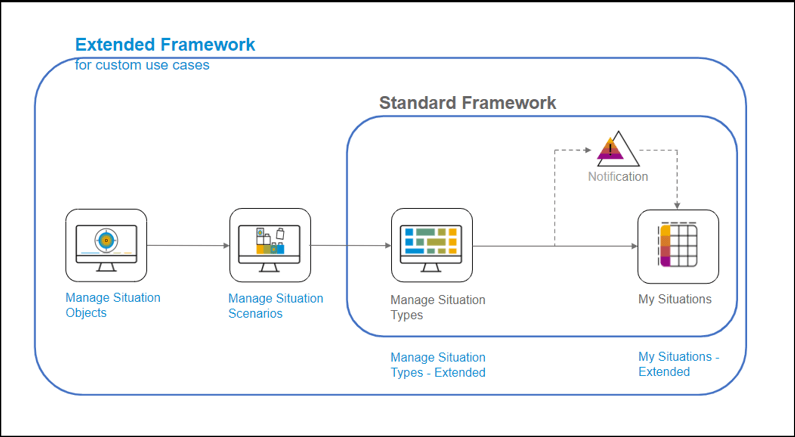
The standard framework processes object-based situations using situation templates provided by SAP. These situations pertain to specific business objects, such as contracts, service orders, invoices, materials, and more. Every standard object-based situation can have just one trigger and is configurable through the Manage Situation Types app
Template Situation Type Example: BILLING DOCUMENT NOT POSTED
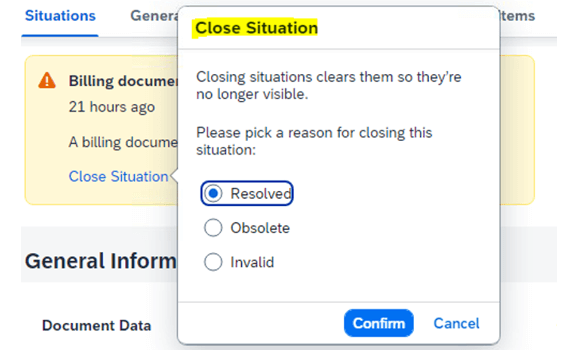
This situation type is designed to alert users when a billing document in the SAP system has not been posted, which could indicate a problem that needs immediate attention to ensure accurate financial reporting and timely revenue recognition.
Custom Situations in SAP work by allowing users to define and monitor specific conditions on business objects beyond the standard templates provided by SAP.
This customization capability enables businesses to address unique scenarios and improve responsiveness and efficiency.
Custom Invoice Alert: Create a situation type that triggers an alert if an invoice remains unpaid for more than 30 days.

The Manage Situation Types - Extended app provides a single point-of-entry for the configuration of message-based and object-based situations in the extended framework of Situation Handling. With this app people can use additional features for message-based situations, such as notifications for the users responsible for situations.
In summary, Situation Handling is a powerful framework designed to enhance proactive management of business processes. By leveraging both predefined template situation types and customizable options, organizations can monitor critical scenarios, receive timely alerts, and take appropriate actions to mitigate risks and resolve issues efficiently. This capability not only improves operational efficiency and compliance but also ensures better decision-making and enhances overall business performance. Through tailored notifications and actionable insights, Situation Handling empowers organizations to address their unique challenges and drive continuous improvement.

SAP Fiori Consultant
Hakan Balcı leads digital transformation initiatives focused on SAP Clean Core and ABAP Cloud. He develops cloud solutions using RAP and SAP BTP and digitalizes processes with expertise in Flexible Workflow, BRF+, and Adobe Forms. He serves as a solution architect in international projects.
Your mail has been sent successfully. You will be contacted as soon as possible.
Your message could not be delivered! Please try again later.